Over the six years I spent writing for Brown University, I had the privilege of covering lectures by some of the world’s greatest minds. Often, these luminaries would dole out advice, some of it career-related, some more general. I often found their words original and inspiring. Recently, I thought to myself: Why keep their comments to myself? Why not share the wealth?
Below are a few of my favorite pieces of advice from writers, politicians, academics and other public figures, ripped straight from my (digital) reporter’s notebook. I tried to keep all comments verbatim, but I’m only human and my typing speed isn’t supersonic; some of these passages are paraphrases of what was said.
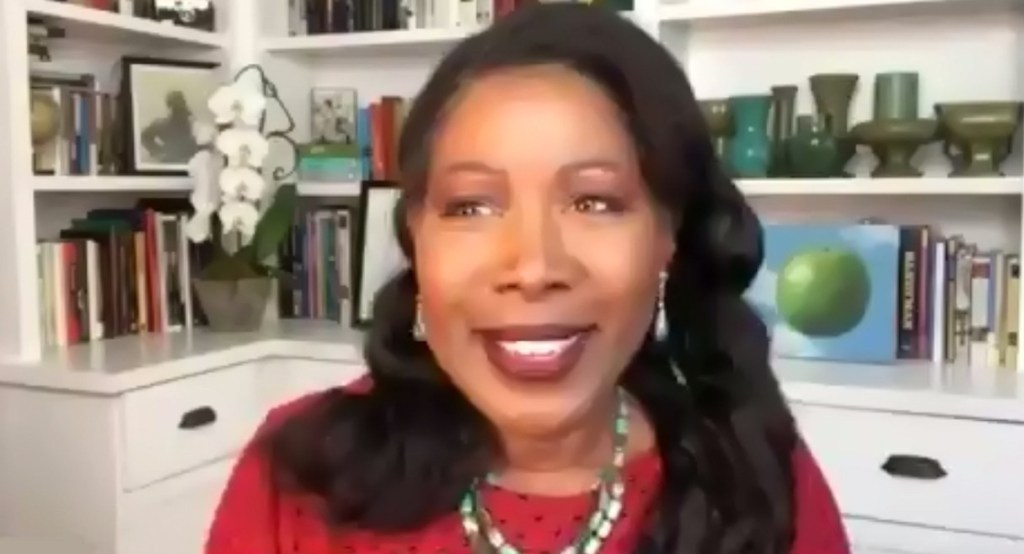
Isabel Wilkerson, author of ‘Caste’: Stand firm in your voice
[Have] a sense of faith that your story and your voice, what you bring to the world, is so unique that no one else can do what you are doing. There is no competition. I think… embracing the world into which one was born — the family system, the language, the mores, the customs of our nuclear family — is one way to tap into who we are. As writers, we are all the repository of all of the language, all of the styles of speaking and expression, that we may have been exposed to growing up. I am a repository and a manifestation of the ways the people in my family spoke, the stories they told, they ways they looked at the world. Your voice is you, and each of us has a different voice. Standing firm in that voice is one of the first things you should do.
Jim Yong Kim, former world Bank president: Every discipline is practical
I think [what’s] really important, especially for students, is to find something that gets you excited. It almost doesn’t matter what it is. A lot of people think, “I have to study a STEM discipline; I have to have a skill.” [But] every job I’ve had has needed people who are better thinkers and writers. I’ve never been in a place where I’ve said, “We’ve got too many good writers.” Good, thoughtful analysis of a complex social or political problem [is always valued].
Paul Krugman, New York Times columnist: Take journalists to task
Vote. Organize. Demonstrate. Write letters — and not just to politicians. When media organizations do both sides[-ism] on issues where there is truth and falsity, people should write in and complain. You’d be amazed at how thin-skinned a lot of journalists are, how much they are intimidated by criticism. And all too often, that pressure comes only from one side, because there are [powerful] organized groups. You can be the other side, the one that is chastising both journalists and politicians for not taking the sides [of] truth and progress.
Salman Rushdie, NOVELIST: Stray from your lane
It’s sometimes thought men can’t write about women, and vice versa. “Stay in your lane” — I think that’s nonsense. I like when I finish [writing] a book knowing things I didn’t know when I started. Everyone can write about anything; it’s whether you do it well or badly. If it’s bad, you should be called out on it, but you [shouldn’t] have to ask anybody’s permission.
You have to get out of your comfort zone and go find things out, like [Charles] Dickens. It doesn’t matter who you are: If you live only in your personal world, your world is restricted. Your task as a writer is to try your best to get it right, and that often means having the humility to understand that you don’t know everything.
A.G. Sulzberger, New York Times publisher: Admit your mistakes
Sometimes we put our foot in it. We make mistakes. We have a [corrections] page in the newspaper every day; I’ve landed in corrections myself, and it’s no fun. But one of the things a good journalist does is own up to mistakes.
Theresa May, former UK prime minister: Resist peer pressure
I think it’s terribly important that women in politics, but also in business and other areas, don’t feel they need to adopt the stereotypical male approach to things. When I went into the House of Commons, [I observed] it’s still a clubby sort of place. We used to sit through the night, [and there was] an emphasis on… drinking together, smoking together. I didn’t get involved in that, it wasn’t my thing. I didn’t feel the need to be part of that scene in order to achieve in politics. The key piece of advice I would give is, be true to yourself.
Bill Clinton, 42nd U.S. president: Prepare to fail
The unhappiest people at my high school reunion are not the people who have gone bankrupt, lost elections, been beat up. The unhappiest people are the people who were afraid to do what they wanted to do in their lives.
If you live, you will fail. If you act, you will make mistakes. Nobody’s perfect. More importantly, circumstances will change, and even if you did everything perfect, you’ll need to change.
It’s hard to imagine this, but it hasn’t been so very long [since] most people had absolutely no control over what they did with their waking hours. They had to grow or catch enough food to stay alive, and then they had to procreate to keep the species going. The generation of young people that has complete freedom to decide how they’re going to spend their waking hours needs to understand that that’s an unbelievable gift.
Questlove, musician & producer: Preserve your stories
Save your history. That concert poster from that college you played back in ’74? It’s going to mean something someday. Oftentimes, you don’t think you’re living through history, but you are. I’d say to anyone: Get your elders, your parents, your uncles, your aunts, to tell you stories for two hours and record it. You’re going to thank me for that.
Crystal Williams, Rhode Island School of Design president: practice compassion
One of the things I think it’s important for all of us, particularly teachers, to help young people understand, is that humility and compassion and curiosity are not “nice things to have.” They are requirements for a life that is fulfilling and meaningful. They are requirements for engaging effectively with a broad diversity of people. You may think you know A, B, C, and you get in your feelings about why [other] people don’t know A, B, C. But you don’t know D, E, F. Should other people get in their feelings about you not knowing D, E, F? What if what we all don’t know becomes less a weapon or a mallet, and more a bridge across which we find each other?
 Jill Kimball